
三少爷的剑
India’s unilateral naming move in China’s Zangnan a self-deception, runs counter to improving ties, warn Chinese experts_我的网站

一 |
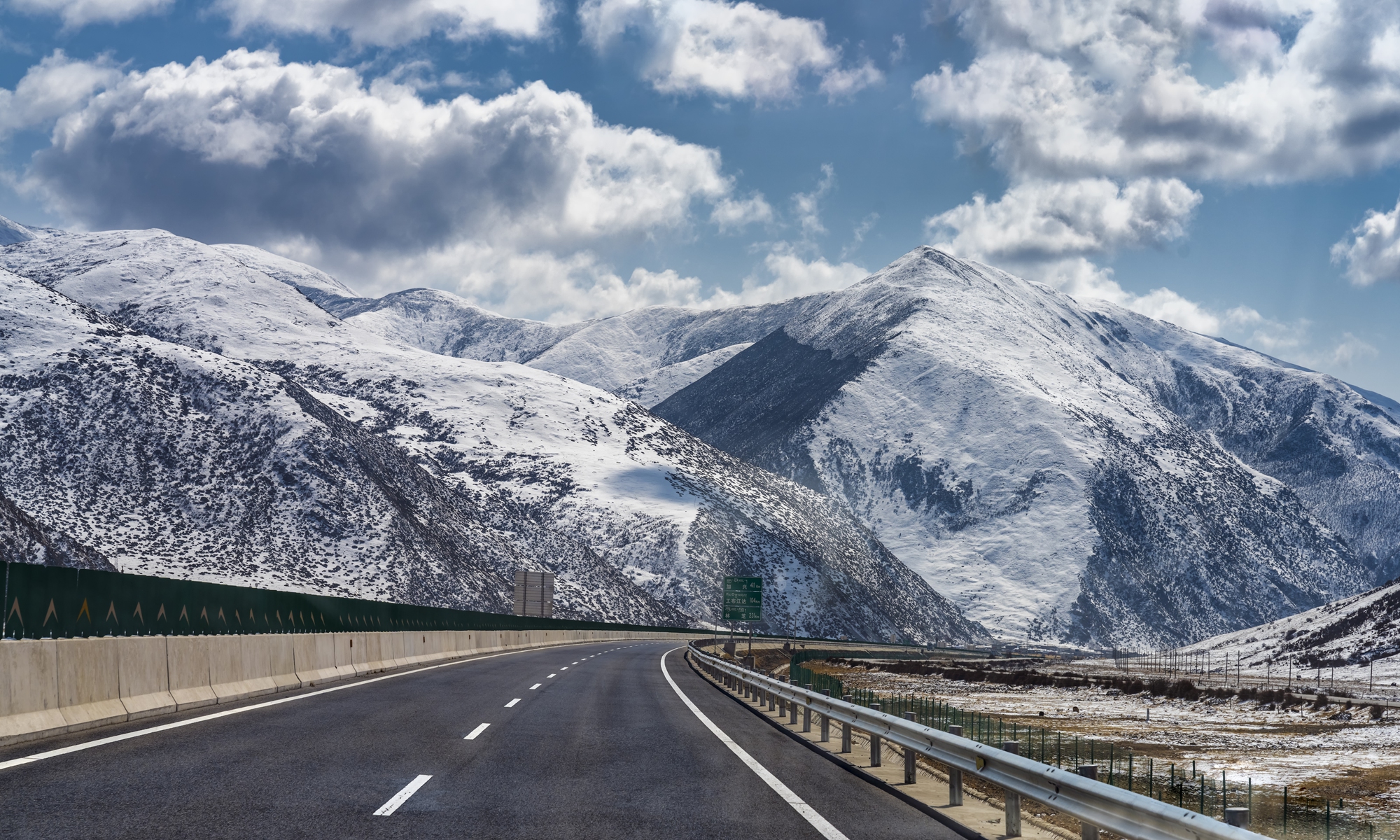
Chinese experts on Sunday slammed India's latest move of identifying 27 locations in China's Zangnan area by their so-called standard names on its official map as self-deception, which runs counter to the improving momentum in bilateral relations and could complicate efforts to properly handle border issues.
The Indian government on Friday said the updated Survey of India map included "four mountain passes and a high-altitude lake," and claimed that the move "is intended to ensure the correct identification of these places" and "improve public awareness of their geographical and historical significance," according to the Times of India.
The claim came shortly after the 36th meeting of the Working Mechanism for Consultation and Coordination on China-India Border Affairs (WMCC) was held on August 6 in New Delhi.
During the meeting, officials from both sides discussed issues including boundary delimitation, border management and control, mechanism building, and cross-border cooperation. They agreed to maintain communication through diplomatic and military channels and jointly safeguard peace and stability in the border areas, according to a statement released by the Chinese Foreign Ministry on Friday.
China has been carrying out standardization of geographical names in the region for a long time. At a time when China-India relations are showing signs of improvement and leaders from both countries are expected to engage through multilateral platforms, any unilateral action by India that escalates the border situation shows no point and will not serve the broader interests of bilateral relations, Qian Feng, director of the Research Department at Tsinghua University's National Strategy Institute, told the Global Times on Sunday.
Qian said India should avoid turning border issue into a larger dispute, as such actions could stifle the improving political ties between the two countries.
Consistent position
China's position on the Zangnan region is consistent. The area covers parts of Nyingchi and Shannan and is located in Southwest China's Xizang region, which has been China's territory since ancient times.
Since 2017, China's Ministry of Civil Affairs has released six batches of standardized names for locations in Zangnan, with a total of 112 names announced as of April 2026. These names cover villages, mountain passes, rivers and peaks, accompanied by standardized Chinese and Tibetan names as well as geographic coordinates.
The dispute over the region has a long historical background. The illegal "McMahon Line" drawn between China and India during the 1914 Simla Convention was never signed or recognized by successive Chinese governments and therefore has no legal validity.
After China's Ministry of Civil Affairs published the sixth batch of names that should be used for places in Zangnan region on April 10, two days later, the spokesperson for India's Ministry of External Affairs expressed rejection to China assigning names to places in so-called "Arunachal Pradesh," adding that these actions detract from ongoing efforts to stabilize bilateral ties.
Chinese Foreign Ministry Spokesperson Guo Jiakun said at a routine press briefing on April 14 that Zangnan region is China's territory. China does not recognize the so-called "Arunachal Pradesh" illegally set up by India. It is fully within China's sovereign rights for the Chinese government to issue standard names for some of the places in Zangnan.
China-India relations are generally stable at the moment. China's commitment to improving and growing China-India relations has not changed. We hope the two sides will work in the same direction and act more in ways conducive to bilateral relations, Guo stressed.
India's latest naming of 27 locations is a unilateral administrative move and does not alter the legal status of the area, Guo Xuetang, a professor at the center for South Asia and Indian Ocean Studies under Shanghai International Studies University, told the Global Times.
According to Guo Xuetang, India's move is an attempt to strengthen its claim of control over the area and create additional leverage in future boundary negotiations. However, such actions have no practical meaning and will only undermine the atmosphere for negotiations between the two countries.
Not merely from the perspective of international law, Zangnan region has culturally, religiously and historically been connected within Xizang, with close links between local communities and civilization, the expert stressed.
Positive momentum
Despite differences over the boundary issue, China and India have in recent months continued efforts to stabilize relations. In December 2024, China and India's representatives for boundary affairs reached a six-point consensus during talks.
Last week, the Nathu La Pass, which was closed for six years, officially resumed operations, signaling a new phase of mutually beneficial cooperation and development in cross-border trade.
During a meeting between Chinese Foreign Minister Wang Yi and Indian Foreign Minister Subrahmanyam Jaishankar on July 22 in Manila, the Philippines, Wang said China and India should consolidate the positive momentum in bilateral relations, and strengthen coordination and cooperation in international and regional affairs, while Jaishankar said India's positions on issues concerning Taiwan and Xizang have not changed, and that India respects China's sovereignty, Xinhua reported.
In the past two years, leaders of China and India have met in Kazan, Russia, and Tianjin, China, and agreed that China and India are partners rather than rivals, and that their development should be viewed as opportunities rather than threats, Wang said.
"India's latest move is essentially an attempt to reinforce its claims over disputed territory and counter China's sovereignty position, a move that amounts to self-deception. Unilateral name changes cannot alter the historical and legal facts surrounding the Zangnan region, nor can they shake China's resolve to safeguard its territorial sovereignty," Guo Xuetang said.
The only way to resolve the China-India boundary issue is through equal negotiations and a fair settlement based on historical and legal principles, while unilateral actions that create tensions or change the status quo will only harm mutual trust and border stability, Guo said.
。 新华社北京8月19日电(记者吉宁)记者19日从京津冀协同发展统计监测办公室了解到,2026年上半年,京津冀实现地区生产总值6.0万亿元,按不变价格计算,同比增长5.1%。京津冀全域面积21.6万平方公里,常住人口超1亿。地域毗邻、人文相亲的区位禀赋,为三地深度融合、协同共进筑牢根基。数据显示,今年上半年,京津冀区域实现服务业增加值4.3万亿元,同比增长5.8%,三地分别增长6.1%、5.5%和5.5%。高端制造表现活跃,京津规模以上高技术制造业分别增长15.7%和8.7%,京冀规模以上工业战略性新兴产业分别增长12.8%和10.9%。首都都市圈建设纵深推进,三地紧抓北京(京津冀)国际科技创新中心扩围契机,持续推动科技创新和产业创新深度融合。今年上半年,天津规模以上智能机器人产业链工业增加值增长18%;保定·中关村创新中心新增签约企业34家,电力与新能源高端装备、新一代信息技术、生命健康等三大主导产业集聚度超75%。天津来自京冀的产业项目到位金额1155.3亿元,同比增长16.6%,占全部产业项目到位金额的55%。今年上半年,雄安新区央企总部、高校、医院等疏解项目加快落地和运营,固定资产投资(不含农户)同比增长10.3%,截至6月底,汇聚69家空天信息领域企业、9个创新平台;集聚稳准智能、华清智言等96家人工智能企业,研发近30款大模型。民生保障亮点颇多。今年上半年,京津冀三地居民人均可支配收入分别为47290元、30581元和18801元,同比分别增长4.8%、4.8%和5.7%。农村居民收入增长继续快于城镇居民,城乡居民收入比继续缩小。

二 | 教育、医疗协作持续深化,北京大学人民医院石家庄医院会诊转诊服务中心揭牌,提升远程诊疗服务水平,京津冀医养结合联盟成员单位达550家。
Current article:http://48vi.tibiantasangnenti.buzz/qllx7/0drt.html
Published on:17:21:06
我的网站相关内容
 護衛艦「かが」巨大なドックに入った! 迫力満点の姿を海自が公開 潜水艦が可愛く見えるほどの大きさ!?
 Ecuadorians electing new president, choosing between an heir to a banana empire and an attorney
 濮阳市:完善绿色替代产品相关制度供给,为特色产业链发展提供法治支撑
 预计配备灵蜥数字底盘2.0 升级800V 智己LS7焕新版6月16日上市
 中央气象台8月25日10时发布台风橙色预警
 东洲区3家煤场、物料堆场清理完成
- ·正定:古城燃动“夜经济”
- ·总台专访丨伊朗知名学者:上合组织将为地区和全球发展作出巨大贡献
- ·基督城大火蔓延630公顷,大量房屋疏散,警方呼吁:不要围观妨碍灭火!
- ·神剧情!C罗半场被换下,十人胜利下半场连扳三球上演3-2惊天逆转
- ·China's landmark Ecological and Environmental Code takes effect to drive green modernization
- ·银河航天实现中国商业航天企业首次面向东南亚整星出口
- ·过去五年石家庄承接京津转移项目537个 石家庄都市圈建设扎实推进
- ·애플 최초 2나노·쿼드 다이 적용... M6·M5 울트라 전격 공개
我的网站最新内容
- ·信达生物:上半年总营收86.18亿元 同比增长44.8%
- ·不是后门是事故!Windows XP最火盗版密钥真相:微软自己泄露的
- ·立昂微:拟投资约30亿元建设12英寸半导体硅片项目
- ·रात होते ही नजर आता है फैटी हार्ट का ये एक लक्षण, इग्नोर करना पड़ सकता है सेहत पर भारी
- ·市总工会举行孝道文化建设合作框架协议签约仪式
- ·红土连克世界前二夺冠,奥斯塔彭科成小威后首位达此成就球员
- ·AI时代,那些藏在安全背后的数学理论
- ·China turns tennis tournaments into tourism magnet as cities package matches with culture, food and city experiences
- ·Ambedkar Nagar News: डेंगू की दस्तक से चरमराई स्वास्थ्य व्यवस्था, तेजी से बढ़ रहे हैं मरीज
- ·因凡蒂诺还想扩军,甚至可能“腾出名额让中国、印度参赛”
- ·宁波男篮官宣赵岩昊加盟:白马银枪 赵岩昊岩续新章!
- ·用心 环卫车巧念“节水经”
- ·宏碁暗影骑士 · 龙 8 Pro 游戏本首销:9955HX3D + RTX5070 Ti,22999 元
- ·名记:看好雷霆新赛季突破60胜 杰威的健康是关键
- ·苹果诉OpenAI未点名Jony Ive
- ·小米这条新规 把二手手机的保修干没了
我的网站热点内容
- ·自知时日无多20年前闹翻无联系 癌父求2女儿谅解
- ·张家界高铁站旅客服务中心有亲子游线路吗
- ·小米汽车:澎程N90 Max智能电动门可防开门杀 先预警后避障
- ·老後の年金、額面いくらなら「非課税」になる?ギリギリ課税世帯になると保険料負担はどうなる?
- ·Did Ranveer Singh Quit Don 3? Here's What We Know
- ·भारत के इस मंदिर में विराजमान हैं दाईं सूंड वाले गणेश जी, चमत्कार सुनकर दूर-दूर से आते हैं भक्त
- ·【讲习所·中国与世界】习近平:建设更具内涵更有活力的中约关系
- ·青春“烫”手!“体彩微光联盟杯”全国高校飞盘联赛火热开赛
- ·黄金面临重要阻力,杰克逊霍尔会议或将成为关键指引
- ·【元旦放假通知】杭州市康运幼儿园2025年元旦放假通知
- ·2026年期货手续费收取介绍说明:附期货手续费优化降低攻略
- ·从0到N,雄安这样定义创新 | “雄安星”何以一飞冲天
- ·微信支付宝支付了数万亿美元,包裹着砷蜂蜜。
- ·马来西亚羽毛球公开赛 中国队收获一冠两亚
- ·戴夫·弗兰科与《Idiots》卡司详解这部喜剧中最具爆炸性的场景
- ·太受欢迎:腾龙28-75毫米F/2.8 DI III RxD镜头增加80美元